
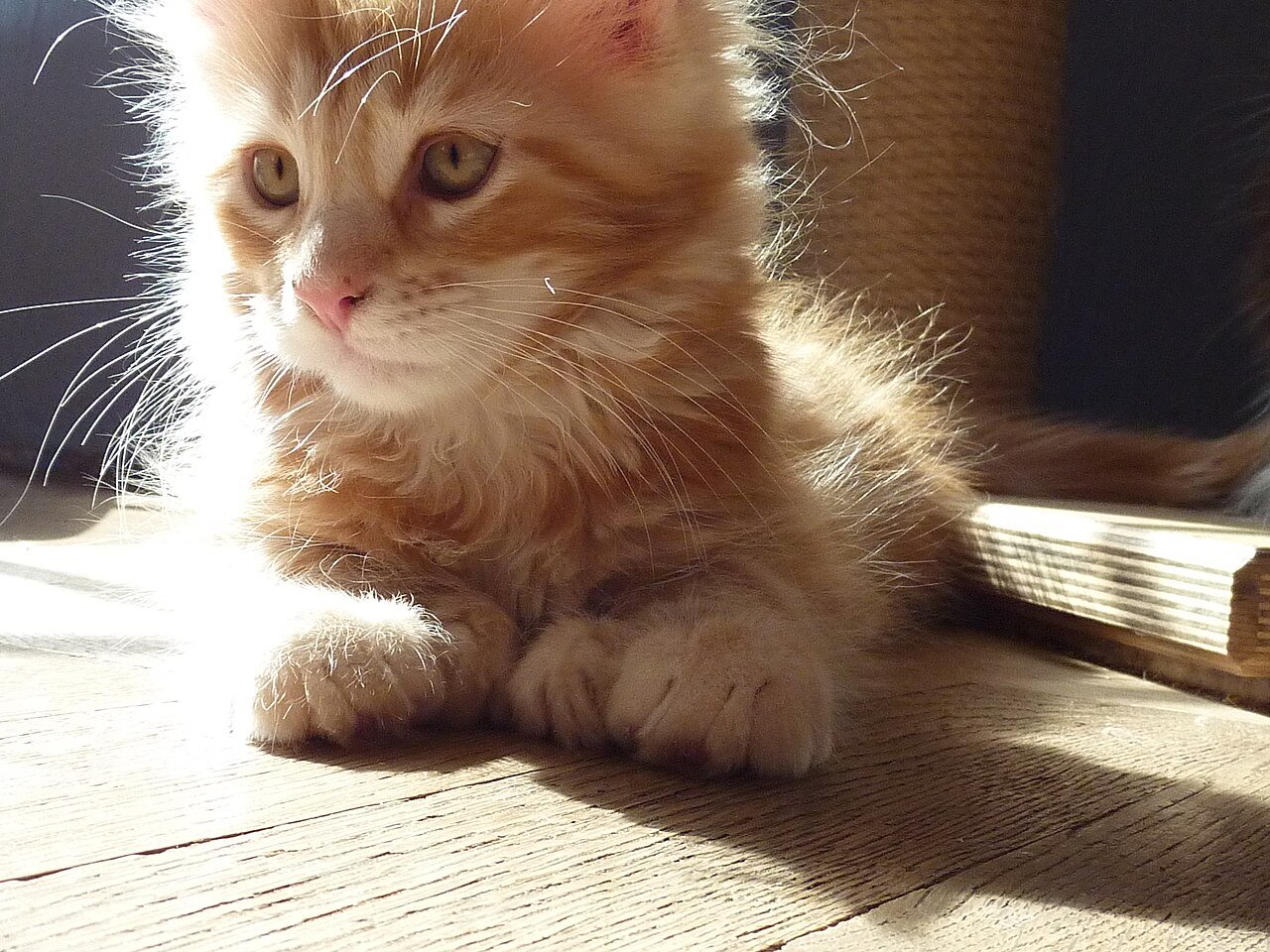
The first days at home
Start your kitten in one quiet room with food, water, a litter box, a bed and a few toys. Let them explore at their own pace, then open up the rest of the house over a few days. Introduce other pets gradually through a door or baby gate first.
Feeding
- Keep your kitten on the same food we feed for at least two weeks. Change diets slowly over 7 - 10 days.
- Kittens under 6 months: 3 - 4 meals a day of high-quality wet food plus free-choice kitten kibble.
- Maine Coons grow until 3 - 5 years. Stay on a kitten or large-breed growth formula until about 12 months.
- Provide fresh water at all times. Many Maine Coons love running water fountains.
- Never feed onions, garlic, grapes, chocolate, cooked bones or lilies (which are highly toxic).
Grooming
The Maine Coon's coat is silky and fairly low-maintenance, but regular grooming prevents mats, especially behind the ears, under the arms and on the "britches".
- Brush 2 - 3 times a week with a soft brush and de-shedding tool; daily during spring shedding.
- Trim nails every 2 - 3 weeks.
- Check ears weekly and clean with a vet-approved cleaner if needed.
- Many Maine Coons enjoy water. A bath every few months keeps the coat fresh.
Litter box
- Use a jumbo or extra-large box; standard boxes are too small for adult Maine Coons.
- One box per cat plus one, in quiet, easy-to-reach places.
- Scoop daily and fully change litter weekly.
Play & enrichment
Maine Coons are intelligent and playful their whole lives. Plan 15 - 20 minutes of interactive play twice a day with wand toys, puzzle feeders and fetch (many Maine Coons will retrieve!). A tall, heavy-duty cat tree near a window gives them a place to climb and watch birds.
Veterinary care
- First vet visit within 72 hours of arrival (required for the health guarantee).
- Finish the kitten vaccine series (FVRCP) and rabies as advised by your vet.
- Spay or neuter by 6 months of age for pet kittens.
- Annual wellness exams, and ask your vet about periodic heart screening for HCM.
Still have questions? Contact us. Lifetime support is part of every adoption.